Translated from the original Traditional Chinese post. Read the Chinese original →
Which practical ECG websites and resources do I recommend?
Preamble (rambling)
Back when my attendings were teaching me on the floor, they'd often say there are two specialties in the hospital whose doctors need to be really good at reading ECGs. Cardiology, of course. The second is emergency medicine.
EM has to know a lot: medicine, surgery, OB/GYN, peds, ENT/ophtho, major trauma, EMS, tox, POCUS. Maybe not at a specialist level, but we at least have to have a working grasp of all of it. After all, we can't control where our patients come from; we just wait quietly for them to arrive, relieve their suffering, and find the cause.
Back when I was a very young resident (gazing back 10-plus years XD), I felt the line EM has to be really good at ECGs was something that should be true, and also sort of wasn't.
Should be true, because we often get patients in prehospital cardiac arrest. Running ACLS….
One, two, three…… stop compressions, switch, analyze the rhythm
Vf (ventricular fibrillation)
DC shock 200 j (defibrillation)
We genuinely see lethal arrhythmias more than most, so of course we get comfortable with those ECGs.
Sort of wasn't, because aren't all doctors supposed to be able to read ECGs anyway?
As my clinical experience grew, I found that being able to read ECGs and being really good at reading ECGs are actually miles apart.
ECG interpretation is an operator-dependent technique. It's entirely possible that the same ECG lands in front of us and I say it's AMI while another doctor says there's no AMI. It comes down to how well each of us understands ECGs.
So why does EM need to be really good at ECGs?
I think it's because our patients come in so many varieties. We have to keep untangling the threads and defusing bombs.
The ECG is a great tool for that. You can do it anywhere (haven't you noticed? With COVID blowing up the ED, ECGs done in wheelchairs are everywhere now) and anytime (do it during ongoing chest pain, do it after symptoms resolve — either way the goal is to see whether there's an obvious dynamic STTC, because a dynamic STTC means the vessel has a problem).
End of rambling~~~ Let me introduce some good books and websites from my ECG learning journey~~
Practical reference books:
Electrocardiography in Emergency, Acute, and Critical Care
Written by the Master Grandma (Amal Mattu). I bought the Kindle version so I can look things up anytime.
ECG Pocket Brain 2014 (Expanded Version)
An ECG reference by Ken Grauer. Also got the Kindle version for lookups. A lot of my rhythm knowledge comes from this master.
ECG's for the Emergency Physician 1
ECGs for the Emergency Physician 2
Both of the above are by Amal Mattu, teaching key concepts case by case.
The ECG in Acute MI: An Evidence-Based Manual of Reperfusion Therapy
This one is Dr. Smith's book, about what ECG morphology changes MI produces. It's genuinely excellent and will deepen your grasp of OMI (Occlusion MI).
Dr. Smith gives this book away as a free PDF — no charge. Here's the file link. (This link is the one Smith ECG Blog provides.)
I took the PDF to a print shop and had them print it as a book. I flip through a few pages over tea or after meals, and every sentence is gold. Strongly recommend this book.
Recommended websites:
ECG Weekly - Learn ECGs One Week at a Time
Amal Mattu's website ECG Weekly picks one topic each week, about 10~20 minutes per episode. I've been listening for about four-plus years and have learned a ton from it. Master Amal teaches each topic through ECG cases in video form, making deep material easy to follow, and wraps up with a summary of the key points every time. And Amal comes at it from the ED physician's angle. For example, when he covers low voltage, he goes over the definitions of its sensitivity and specificity, but from an EM doctor's point of view we should maximize catching cases that might have a large pericardial effusion, so from our EM angle we should look at it in terms of sensitivity and pull out every possible case.
The site is paid, about 26 US dollars a year — honestly cheap and generous.
Next up, of course I have to recommend Dr. Smith's Blog.
Dr. Smith is the main author of the site. His team includes Pendell Meyers and Ken Grauer, plus another author who joined in 2022, Jesse Mclaren.
Jesse Mclaren is an emergency physician in Toronto. On Emergency Medicine Case he walks through and analyzes one ECG case each month.
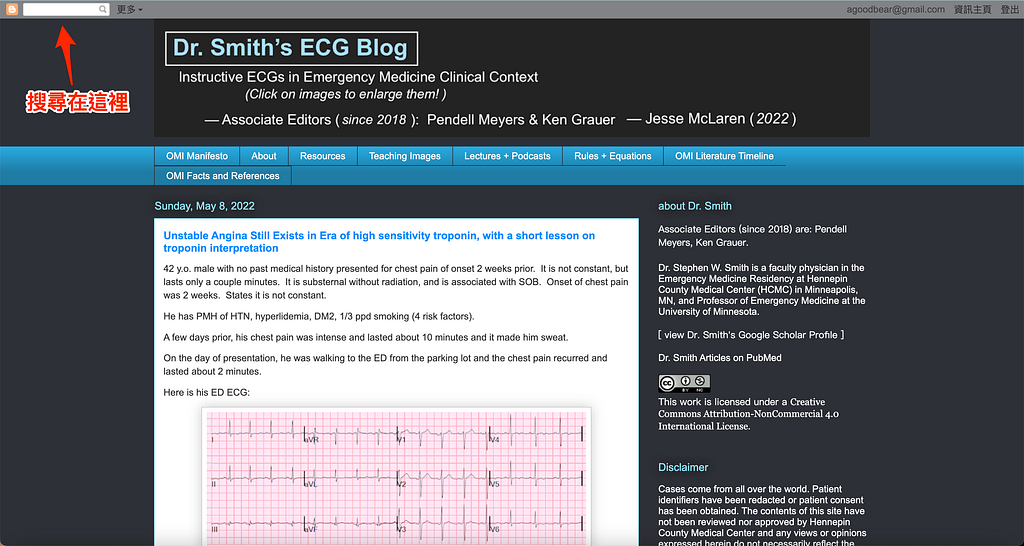
The content on Smith’s ECG Blog is mainly about recognizing OMI, though of course it occasionally covers other arrhythmias too.
The site is free and mostly text.
A new post comes out about every 2~3 days. My own habit: there's a search box at the top left of the site. If I want to see how Dr. Smith explains a certain topic, I type the keyword into search, say Brugada syndrome, and a list pops up of the posts tagged with Brugada syndrome. Then I read through them at my own pace.
Next, the master of ECG rhythm interpretation: Ken Grauer's website ECG Interpretation.
The site content is free. Master Ken Grauer explains each ECG in great detail, item by item, from head to toe. And he doesn't skip things just because they're basic.
Every time I see a reading that thorough, I feel I fall short — and at the same time it reminds me that this is exactly how you're supposed to read an ECG: go through Rate-Rhythm-Axis-Interval-Ischemia one by one, note which are abnormal, what the DDx is for each abnormality, and finally combine it with the patient's history to figure out what's actually going on with the heart.
Also, Ken Grauer is incredibly gracious. Email him an ECG question and he almost always replies the same day. Every time I ask him something, he says:
"Excellent question" 😂
Next, Dave Klein's website Current ECG. David is a paramedic who is also very passionate about ECGs.
His site content is video and paid. About once a month he brings in someone with ECG expertise to teach a session. So there's roughly one video a month.
The annual fee, as I recall, is 57.5 US dollars. I think it's a bit pricey; if you want to see more, you could subscribe for a year and try it.
ECG Academy - A Better Way To Read ECGs
Next, Dr. Nick's ECG Academy, also video-based, a bit like ECG weekly.
Annual fee is about 125 US dollars. A subscription gets you the previously recorded course content, plus ChalkTalks released now and then, but I felt the teaching leaned basic. So after one year I unsubscribed.
Above is EKG Guy - Anthony Kashou's website The EKG Guy
Paid, 167 US dollars a year. If you pay 197 US dollars for your first year, you get a year of access plus a free book and a Caliper.
When I subscribed I paid 197 US dollars, so I got a book, and you can choose the book size. I went with the large one; it's easier to read. No shipping charge — they'll send it to you wherever you are on the planet.
As for EKG Guy's video style, he likes to build a whole lesson around a single image or slide and talk around that slide the entire time. I think he teaches really well and the content isn't hard to digest. Too bad the annual fee is a bit steep.
Next, LITFL's ECG library is also a very good ECG education resource.
LITFL's ECG content is maintained jointly by Robert Buttner, an Australian emergency physician, and Emre Aslanger, a Turkish cardiologist and ECG master.
Master Emre Aslanger is currently planning an educational app to help identify OMI, and has been looking online for people in various countries to help translate. I'm very interested in OMI myself, so I volunteered as the Traditional Chinese translator. I hope Emre Aslanger and our group of interested translators from around the world get the app out soon~~~ stay tuned, everyone.
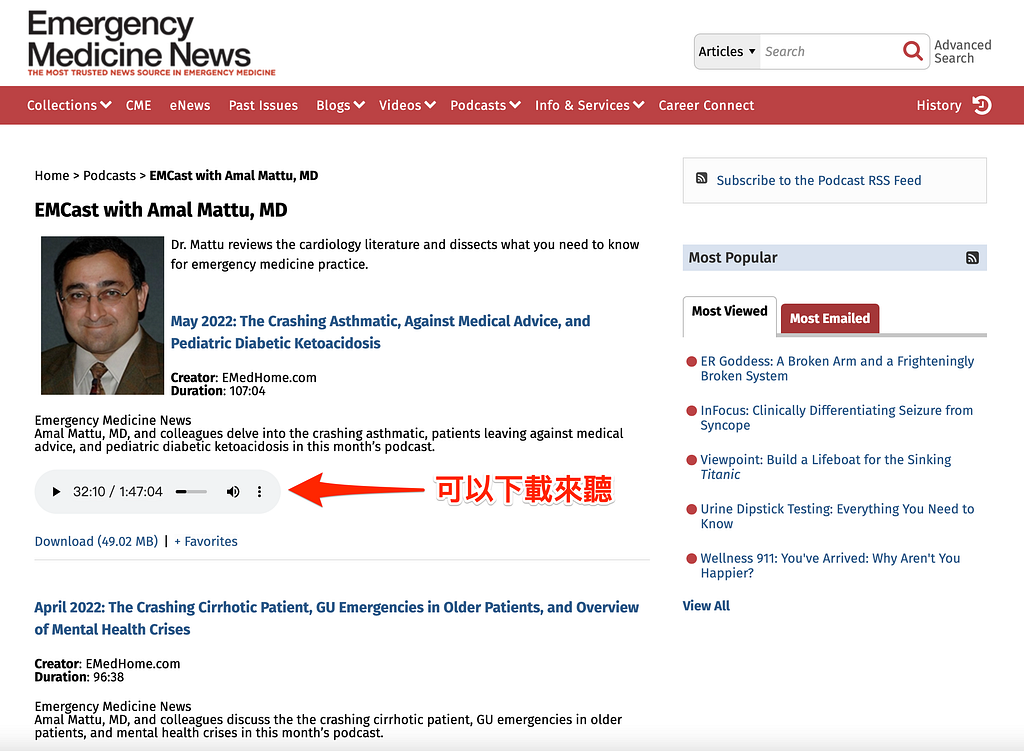
Then, besides teaching every week on ECG weekly, Amal Mattu also has a monthly column on EMCast. Column link here. Click in and you'll see the image below; the content is in podcast form. The column isn't limited to ECGs, though — all kinds of topics come up. After all, Amal Mattu is an emergency physician too.
Last, ECG STAT, a companion site to ECG weekly. When it first came out I saved the URL, but later the site location was taken down and I couldn't get in.
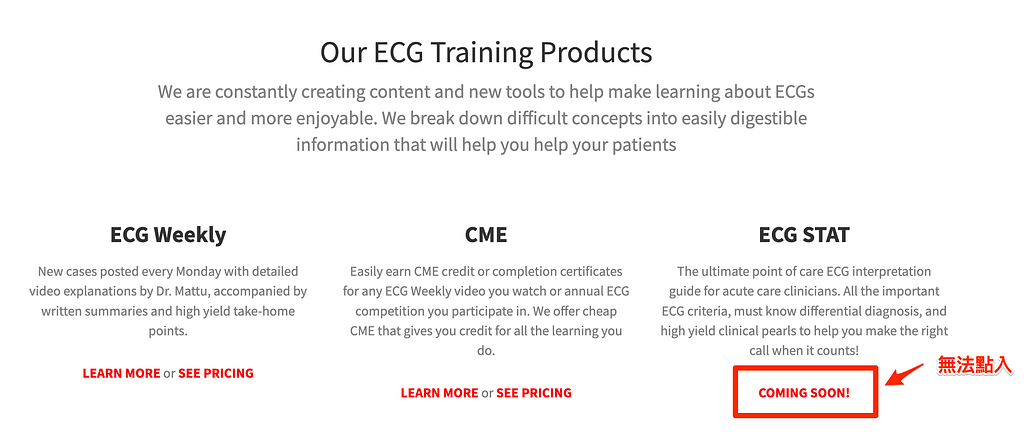
But with this URL you can still get in XD (bookmark it now!!!!!)
This companion site sorts a lot of the DDx from Amal Mattu's teaching into categories. It's basically a little ECG dictionary. Personally I find it very practical.
Recommended people on Twitter:
I use Twitter to follow specific people — people who share my passion for ECGs and post ECGs for everyone to read and discuss. Here are some of the people I follow; there are quite a few, so I won't list every one.
@DidlakeDW, @EMS12Lead, @EcgOxford, @OnlyEcg1, @smithECGBlog, @SumonCh66773015, @ecg_cases, @ecg12com, @AslangerE, @PPodrid, @UlhasDr, @narrowQRS, @EM_RESUS, @ekgpress, @BrooksWalsh, @The_Nanashi_O
Or type #ECG into Twitter's search bar and you'll get the posts tagged ECG that day. Trust me, you'll never get through them all~~~~
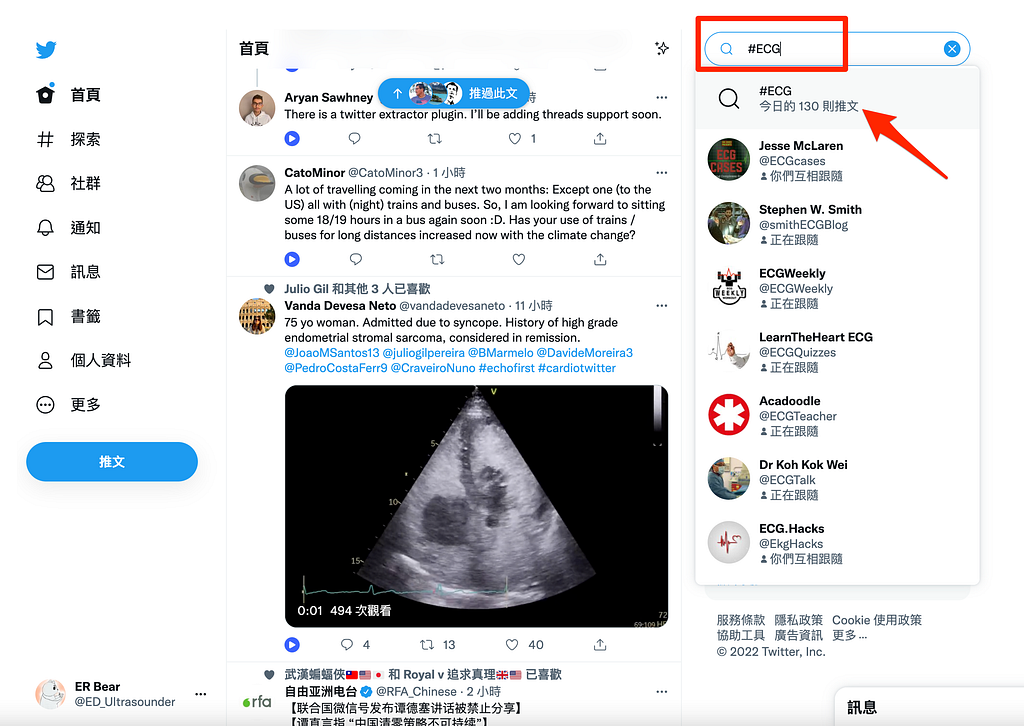
Which raises a problem: too much information and you don't even want to look XD
So when following on Twitter, if you want high-value posts, the first requirement is to "stand on the shoulders of giants". Who are the giants → people with lots of followers and lots of replies to their tweets. The question is, how do you find them?
How to find off-the-charts high-value posts on Twitter is an art in itself. Let me roughly explain how to search more efficiently.
Using Tag for posts you're interested in is the most basic opening move on Twitter.
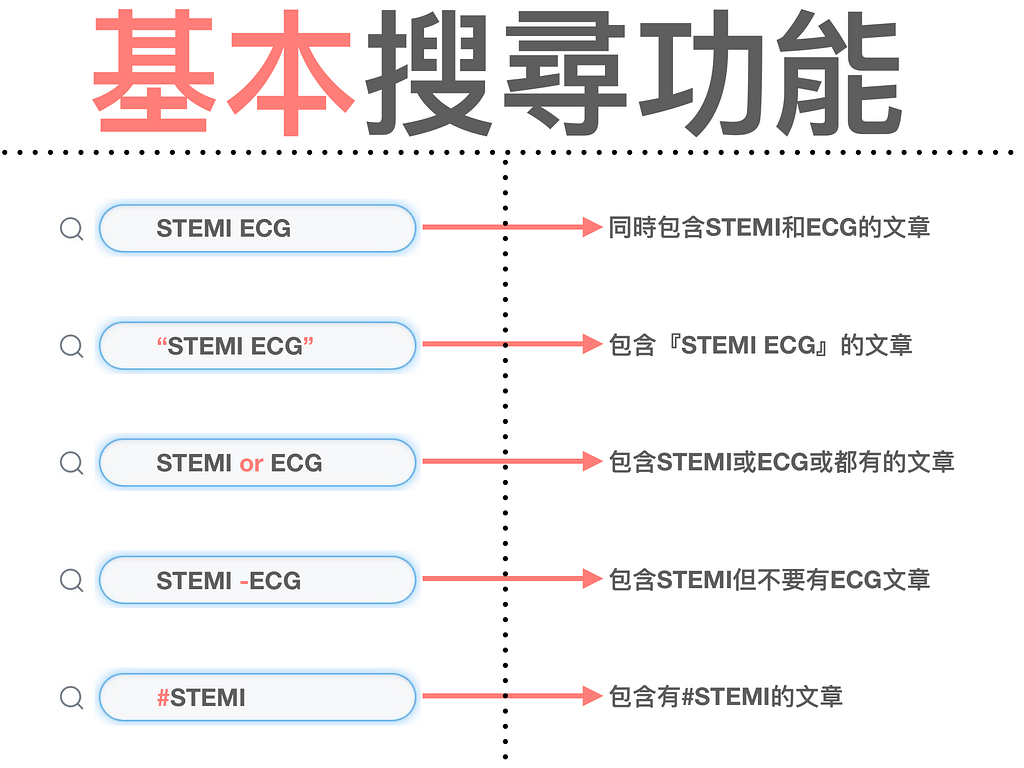
We can use STEMI "or" ECG → that searches for posts containing STEMI or ECG (there may be a LOT)
Then add advanced search on top

Advanced search is usually the key step for value. Because only good posts get retweeted, get replies, get likes.
So set the keywords you want to search, then add a minimum number of replies and retweets.
When I do it myself, I set retweets at 5 and tweet replies at 5~10.
Generally, the higher you set retweets and replies, the more traction the post has, and usually the discussion is worth more.
But careful: set the numbers too high and it's like setting specificity too high — you end up finding hardly any posts. Set them too low (sensitivity too high) and you get a flood of junk.
Our time is precious; don't waste it weeding out garbage.
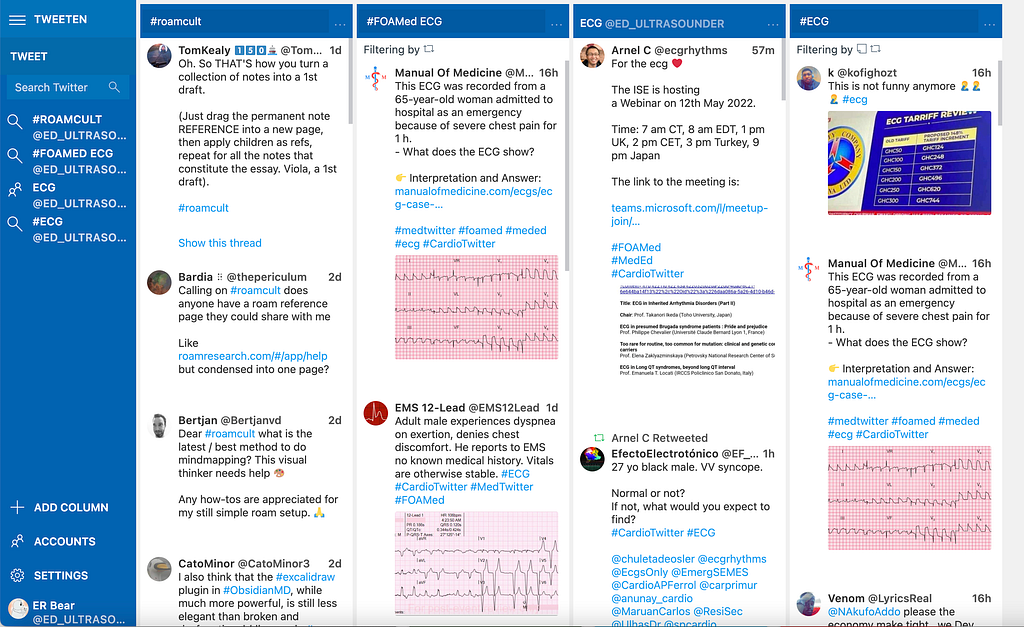
You can of course also use TweetDeck to help filter. Below is my TweetDeck screen. I've set up my keywords and filled numbers into the advanced search filters, and it filters out cleaner, higher-value posts on its own. I taught a session on this at the Northern Region Emergency Medicine Residents Joint Training the year before last. If people are interested, I'll write another post about it next time.
Recommended courses:
This course is taught by Amal Mattu: a packed 14~16 hours of ECG, hundreds of ECG cases. Very much worth taking. Amal truly holds nothing back in this course.
The fee is 550 US dollars — that's the only downside. But I strongly recommend it~~~ it'll level you up by decades of skill.
EM:RAP holds a themed conference every year; last year's theme was Emergency Cardiology

I also think it's very much worth taking. The content is all about emergency cardiology. For those of us roaming the ED trenches, it's genuinely helpful. The course list is in the video below:
Same as before, the only downside is the price. You have to be an EM:RAP member to watch it. I've kind of forgotten the actual price — about 10 (cough, five hundred) US dollars, I think (that's definitely the number I'm telling the household treasurer 😅)
Off-the-charts value picks: ⭐️⭐️⭐️⭐️⭐️
Book:
Websites:
The ECG weekly and Smith’s ECG Blog
Twitter people:
Recommended courses:
EMC2 and Key Topics in Emergency Cardiology — both highly recommended
Final rambling:
All these ECG courses are really about building up my own ECG knowledge; in the end it all goes to the patient, so they can get timely treatment.
I've spent a fair bit of money and taken some wrong turns. Some teaching sites look nice on the outside but are basically just scamming your money XD
So I've written up the good websites/books/Twitter people/conferences I've come across in these years of teaching myself ECG, hoping that beginners who share the interest won't take too many detours and can get straight onto the right track~~~
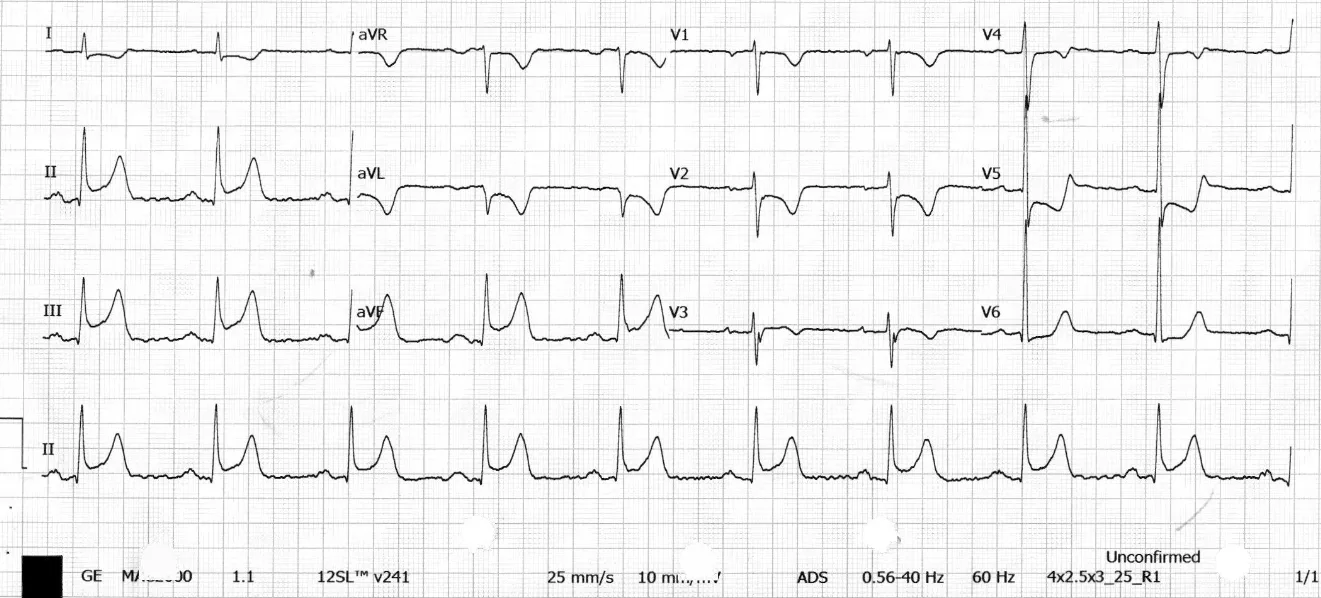
Thoughts on this case? Leave a comment, a like, or a reaction below.
comments powered by Disqus